Most architects define success by publication. A project appears in an international magazine, wins an award at a prestigious competition, gets featured on a design platform. The metric is visibility—how many people see the building, how many design professionals recognize the work, whether the project enters the canon of notable architecture. We spent the first fifteen years of our practice chasing these markers.
Then we spent time in a different kind of project, working with communities that most architects will never encounter—villages in coastal Andhra Pradesh affected by cyclone damage, informal settlements on the outskirts of cities, communities with almost no budget and almost infinite need. These projects taught us a different definition of success. We learned that the most important client is rarely the one who pays the design fee. It's the one who lives in the building for the next twenty years.
What is DRIS?
Between 2015 and 2019, Sai Nirmaan was engaged with the Disaster Relief and Inclusive Shelter programme, or DRIS—a collaborative initiative between CARE India, Child Fund, Save the Children, and ADRA. The trigger was cyclone damage in coastal Andhra Pradesh, but the underlying imperative was deeper: how do we build shelter for the most vulnerable populations in ways that are durable, dignified, and economically viable for communities with almost no resources?
The programme worked in districts like Nellore, Srikakulam, and Visakhapatnam, where families affected by disaster lived in temporary shelters for months or years, waiting for government assistance that often never materialized. Traditional disaster relief follows a familiar pattern: rapid assessment, standardized designs, prefabricated units dropped into communities, and a return to normalcy. This approach treats communities as passive recipients rather than active stakeholders. It often produces buildings that don't fit local context, can't be maintained by residents, and reinforce rather than challenge the marginalization that made these communities vulnerable in the first place.
DRIS took a fundamentally different approach. Rather than imposing designs, we worked with communities to understand what they needed. Rather than standardized solutions, we developed context-specific designs that could be built and maintained with local materials and labor. Rather than treating shelter as a temporary problem, we designed for permanence, dignity, and the possibility of incremental improvement as families' circumstances improved.
When Constraints Become Teachers
Working with almost no budget is disorienting for architects trained in developed-country practice. In most of our commercial work, cost is a constraint, but budget exists. You can specify quality materials, hire skilled labor, build systems redundancy. In disaster relief housing, you have perhaps 100,000-150,000 rupees per unit. For that amount, you must provide a complete, durable shelter for a family of five.
This constraint initially felt paralyzing. How do you design a house for that budget? How do you ensure it lasts twenty years? How do you incorporate passive cooling, proper ventilation, durability against salt air and high humidity? The answer, counterintuitively, is that the constraint forces clarity. Every material choice matters. Every square foot must serve a function. Every detail must be constructible by community members without specialized equipment. There is no room for waste, no budget for decoration, no possibility of later revisions.
We began sourcing locally. In one region, stone from a nearby quarry was dramatically cheaper than brick. We designed stone masonry walls rather than brick. In another area, timber from local forests was available; we designed wooden structural frames despite initial reluctance. In a third location, mud was abundant; we incorporated rammed earth as a thermal mass that provided passive cooling. These were not aesthetic choices made later; they were fundamental design decisions driven by availability and cost.
The buildings that emerged from these constraints were genuinely beautiful—not beautiful in the sense of a magazine feature, but beautiful in the way that clarity, honesty, and purpose create beauty. A shelter built entirely from locally-sourced stone, roofed with locally-made tiles, designed to be built by the family that would live in it, had an integrity that no amount of expensive finishes could achieve.
The Importance of Community Co-Design
Perhaps the most important lesson from DRIS was that communities understand their own needs better than any architect. We arrived with assumptions about how people lived, how they organized space, what they valued. Most of these assumptions were wrong or incomplete. A family's social life might center on a front verandah where extended family gathers every evening. A kitchen might be a separate structure where cooking happens over a fire. Children might sleep in one room; adults in another, with a completely different spatial organization than Western middle-class assumptions about the bedroom. Storage needs, cooking practices, social hierarchies, ritual spaces—these varied by community and could not be standardized.
Participatory design meant spending weeks in communities before drawing a single line. We held group discussions, visited homes, observed daily life, understood constraints and priorities. A widow's needs differ fundamentally from a family with young children. A household engaged in agriculture has different spatial requirements than one engaged in fishing. An elderly couple has accessibility needs that a young family doesn't face. Rather than designing one house and building it fifty times, we designed a flexible framework that families could adapt to their specific circumstances.
This approach required a different skillset from conventional architecture. Architects are trained in aesthetic judgment and formal composition. Community engagement demands listening, humility, the ability to challenge one's own assumptions. It means accepting that a family might choose a spatial organization you wouldn't have proposed—and recognizing that this choice is right because it reflects how they actually live, not because it confirms your design principles.
What Civic Architecture Should Aspire To
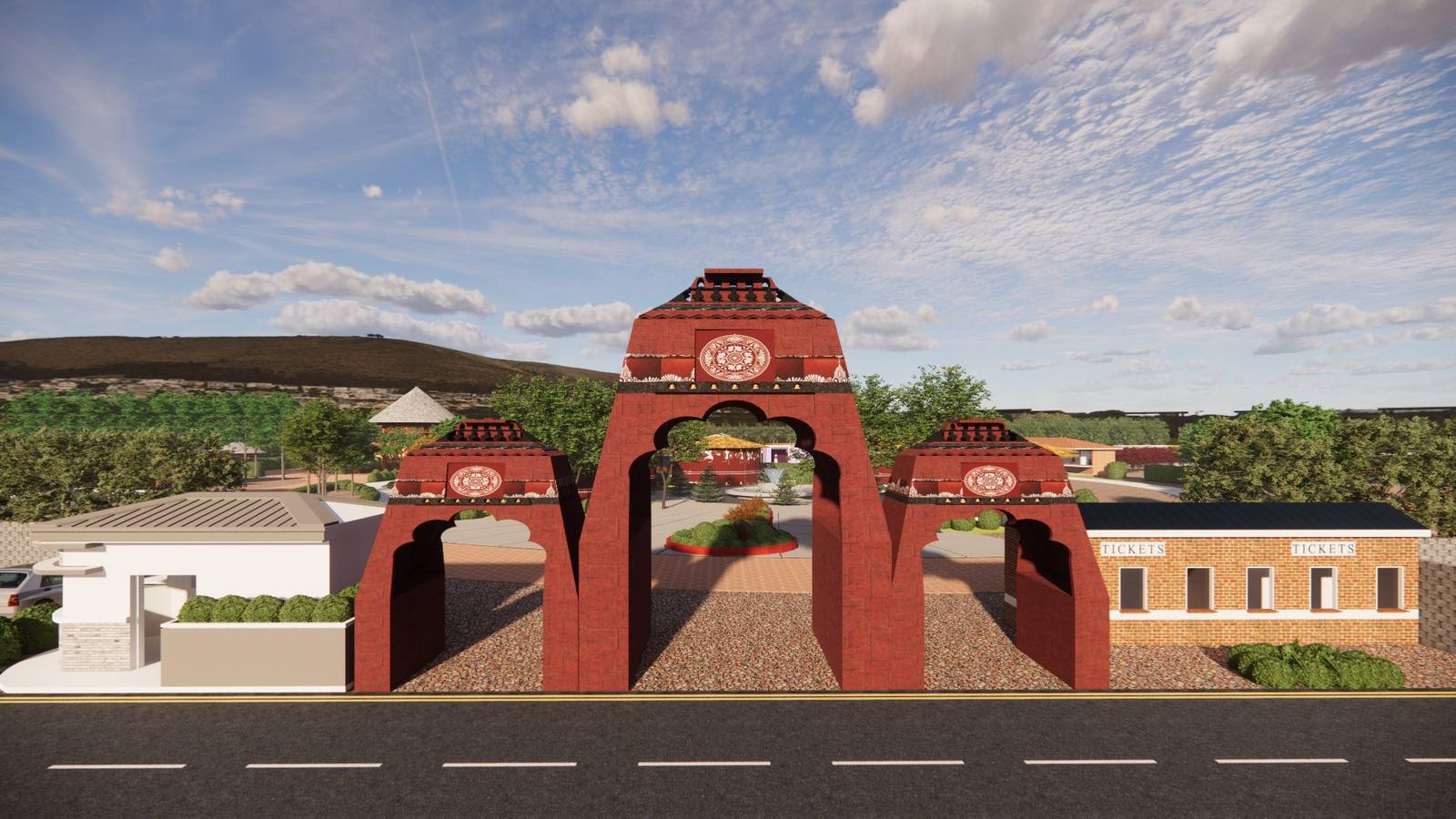
The experience with DRIS informed our approach to a subsequent project: the Tribal Museum at President's Village, a cultural center that tells the story of tribal communities in Andhra Pradesh. This project sits at the intersection of architecture, history, and social responsibility. It is not disaster relief housing, but it shares fundamental principles with that work. It is designed to serve a community, to tell their stories, to provide them agency and voice in how their history is represented.
Civic architecture—museums, community centers, public buildings—should aspire to more than functionality and aesthetic achievement. It should aspire to dignity. It should recognize that the communities it serves have been historically marginalized, that their stories have been told by outsiders, that the physical space itself can either reinforce or challenge that marginalization. A museum designed by architects without deep engagement with tribal communities will inevitably reflect external perspectives. A museum designed collaboratively, with tribal voices central to content, curation, and spatial experience, becomes something entirely different—it becomes a tool for communities to represent themselves.
The Tribal Museum's architecture reflects this commitment. The design draws from vernacular building traditions while addressing contemporary accessibility and functionality requirements. Local craftspeople were trained to build elements of the museum rather than external contractors brought in. The building itself becomes a teaching tool, demonstrating techniques and materials rooted in the region's traditions. The interior spaces are organized in ways that local stakeholders identified as meaningful rather than in ways that international museum standards prescribe.
Architecture's Responsibility
The architectural profession globally faces a moment of reckoning. We design buildings that emit roughly 40% of global carbon emissions. We work primarily for clients wealthy enough to afford architects—a global elite. We have been largely absent from conversations about housing shortage, climate migration, economic inequality, and social justice. Meanwhile, the majority of people on Earth live in buildings designed not by architects but by local builders, informal sectors, and communities themselves. Our profession's absence from these conversations is not neutral; it's a choice to remain focused on high-profile, well-funded projects for wealthy clients.
This is a choice we've decided to change. Not by abandoning commercial practice, but by integrating social responsibility into how we approach all work. Every project is an opportunity to ask: Who is this building for? Whose interests does it serve? Who has been consulted in its design? What is its social and environmental impact? These questions don't result in worse architecture; they result in more honest, more resilient, more beautiful architecture because it's rooted in reality rather than assumptions.
The work with DRIS and the Tribal Museum has taught us that architecture's greatest potential is not in creating beautiful objects or winning design awards. It's in creating spaces that serve communities, that tell stories that matter, that give dignity and agency to people who have been historically marginalized. A shelter built in a disaster-affected village that provides safe, healthy housing for a family for the next twenty years is more successful architecture than a museum in a major city, regardless of critical acclaim or aesthetic innovation.
"Every building we design is an act of power. It either reinforces existing hierarchies or challenges them. It either serves the community or serves our ego. We've learned to ask which it is, and to choose accordingly."
Toward a More Responsible Practice
Integrating social responsibility into architectural practice is not easy. It requires different skills, different timelines, different financial models. It demands that we spend time listening rather than speaking, that we prioritize community needs over design innovation, that we accept solutions we wouldn't have invented ourselves. It means building projects that will never be published in magazines and that most of our professional peers will never see.
Yet it also makes us better architects. The discipline of designing without excess budget, the humility of designing with communities rather than for them, the satisfaction of knowing that a building serves real human needs—these create a different kind of professional reward. Our work with disaster relief housing and civic projects has become central to how Sai Nirmaan practices. We bring these lessons—listening, humility, attention to context, social responsibility—to every project, regardless of budget or profile.
Architecture has the power to create dignity, to tell stories, to serve communities. But only if we recognize that this power carries responsibility. The profession will measure itself increasingly not by design awards but by impact: Did this building serve the people who live in it? Did it respect the community's culture and aspirations? Did it contribute to a more just and sustainable world? These are the metrics by which architecture should be judged. And by these metrics, the most important work is often the work that nobody sees.
Interested in Community-Focused Architecture?
We work on commercial, residential, and civic projects with a commitment to social responsibility and community engagement at every scale.
Get in Touch